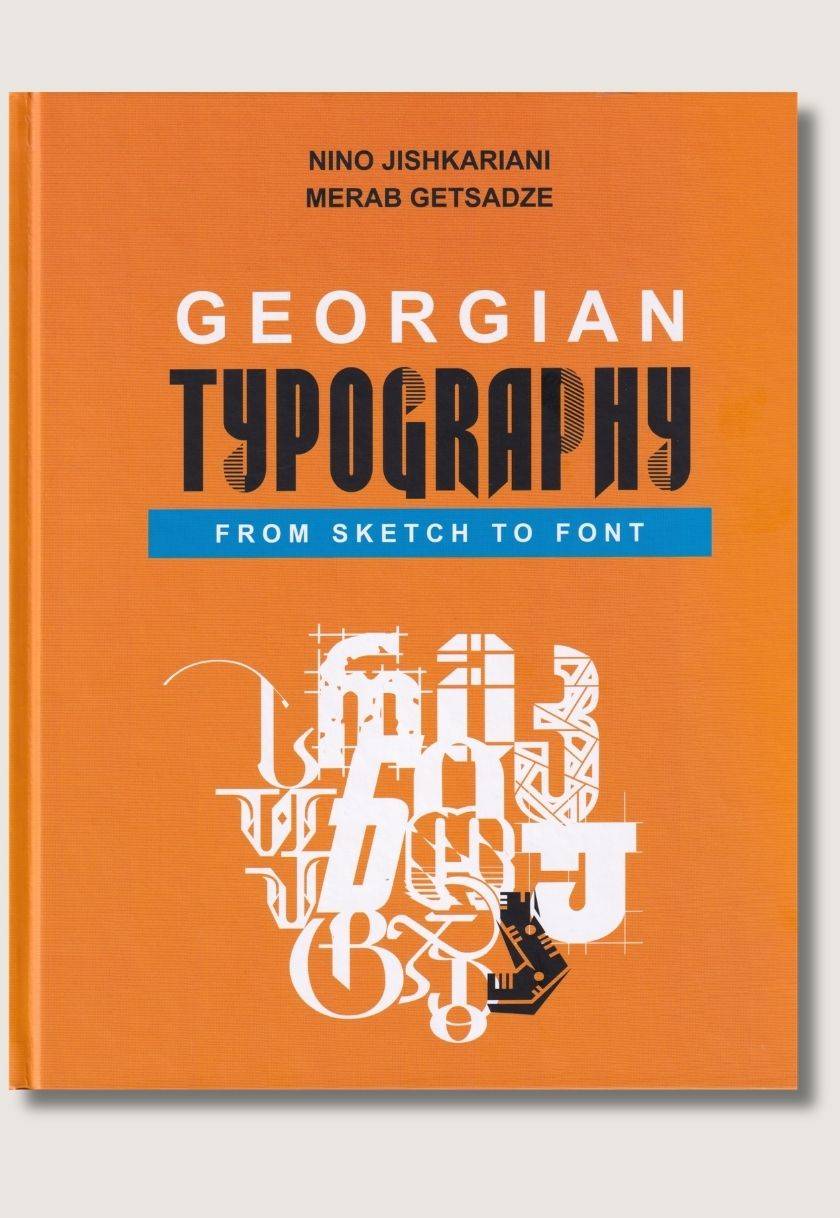
Georgian Typography from Sketch to Font
The Georgian writing system is unicameral, consisting of a single register of letters. Any given word is written either entirely in lowercase (Mkhedruli) or entirely in uppercase (Mtavruli), the latter being employed solely as a designer’s conceptual choice. It is important for designers to note that the use of capital letters in Georgian writing is highly specific. Capitals are used exclusively for titles and headings, not for proper names or at the beginning of sentences, as is common in Latin scripts.
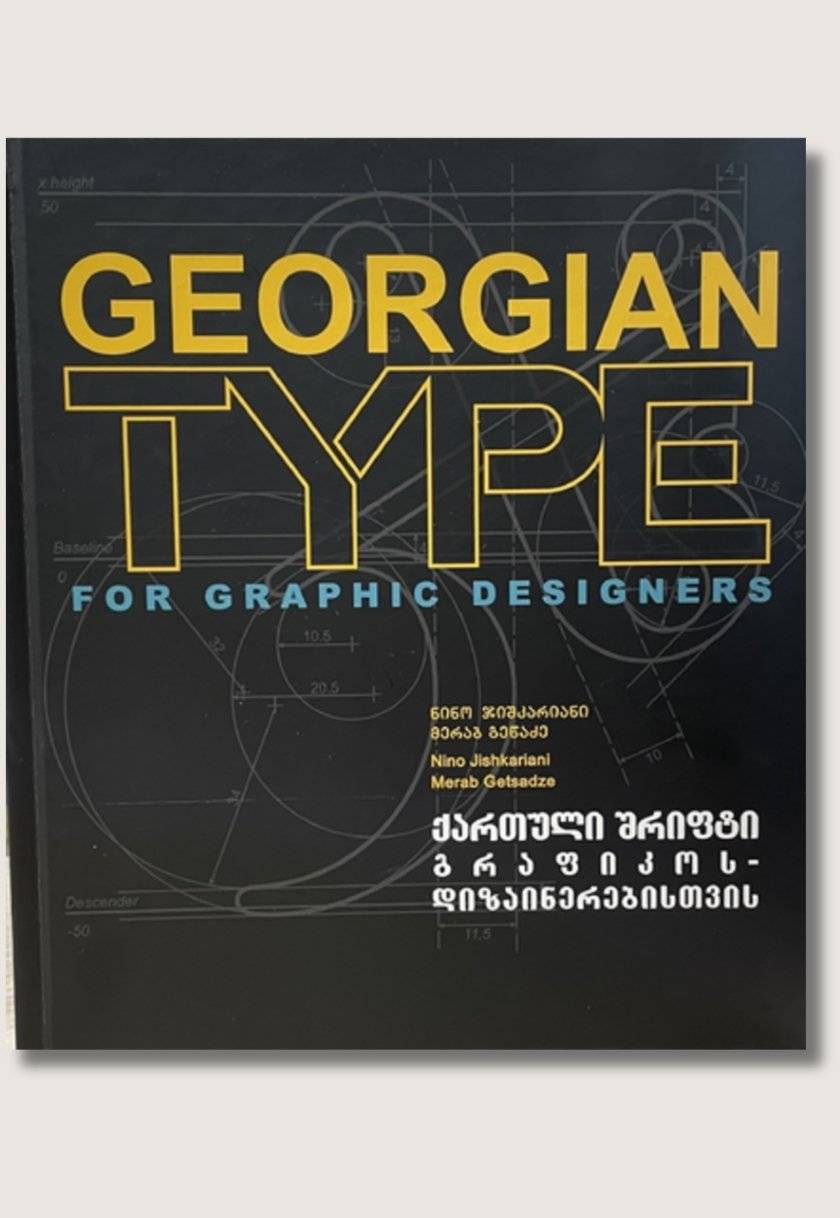
The book is composed of three main parts and several subchapters. The first part contains the primary text, describing the forms of the Georgian script and the five developmental periods of the Mkhedruli typeface. The second part discusses the key features of Georgian fonts, while the third part, designed to provide a broader visual understanding, presents materials illustrating the activities of the Georgian Font Association, along with examples of Georgian typeface creation, development, and application in recent years.
ანოტაცია
This book is intended as a practical guide for readers interested in the Georgian alphabet and type design. It does not claim the status of a linguistic study. The manual employs terminology based on the Unicode system, which in some cases does not coincide with the official academic terminology used in UNESCO’s 2016 nomination text “The Living Culture of the Three Writing Systems of the Georgian Alphabet” and in scientific literature in general. One example of such a discrepancy concerns the first Georgian script, Mrglovani (“Rounded”), which is officially and academically recognized under that name, but registered in Unicode as Asomtavruli. The inconsistency arose because communication with Unicode took place mainly at the level of civic initiatives, without institutional collaboration from the state. As a result, an error in nomenclature registration occurred, and the term Asomtavruli has since become widely established. For this and other organizational or technical reasons, Georgian scripts appear in three separate locations within the Unicode 11.0.0 chart: Asomtavruli (“Mrglovani”) and Nuskhuri (“Khutsuri”) and Mkhedruli appear separately — a structure not typical for other writing systems. The table also includes diacritical marks used for the diverse languages spoken in Georgia. These marks are not assigned separate codes, but they can be generated through the use of combinable characters.
The Georgian writing system is unicameral, consisting of a single register of letters. Any given word is written either entirely in lowercase (Mkhedruli) or entirely in uppercase (Mtavruli), the latter being employed solely as a designer’s conceptual choice. It is important for designers to note that the use of capital letters in Georgian writing is highly specific. Capitals are used exclusively for titles and headings, not for proper names or at the beginning of sentences, as is common in Latin scripts.
The book is composed of three main parts and several subchapters. The first part contains the primary text, describing the forms of the Georgian script and the five developmental periods of the Mkhedruli typeface. The second part discusses the key features of Georgian fonts, while the third part, designed to provide a broader visual understanding, presents materials illustrating the activities of the Georgian Font Association, along with examples of Georgian typeface creation, development, and application in recent years.
მახასიათებლები
კატეგორია
გრაფიკული დიზაინი,კულტურათა გაცნობა,წიგნები საქართველოზე / Books about Georgia,ხელოვნება / ხელოვნებათმცოდნეობა,ტიპოგრაფია
გამომცემლობა
მერიდიანი
ენა
ინგლისური
ხელმისაწვდომი
არის
აისბიენი/აიდი
9789941348709
გვერდები
236
გარეკანი
მაგარი
გამოცემის წელი
2026
ფორმატი
21.5X27